
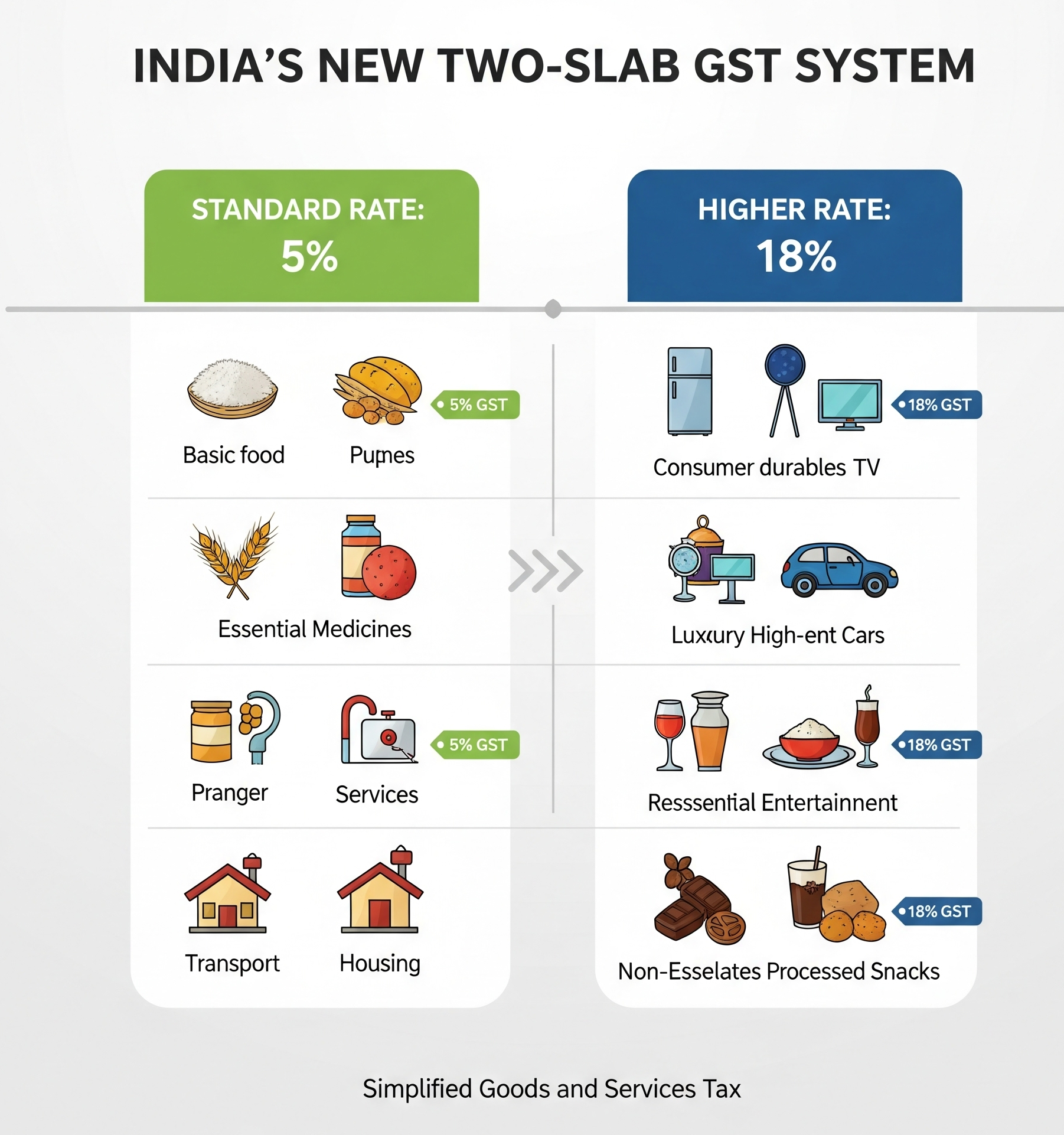
In a landmark decision, the GST Council has announced a major overhaul of India’s Goods and Services Tax structure. Starting from **September 22, 2025**, the country will move to a simplified, two-slab GST system. This is the most significant change since the introduction of GST in 2017 and will impact the prices of hundreds of everyday items.
This guide will break down everything you need to know about the new GST rates, and we’re excited to announce that our **GST Calculator has already been updated** to reflect these changes.
Why is This Change Happening? The Goal Behind the Reform
The existing multi-slab structure, while functional, was often criticized for being complex. The primary goals behind this monumental shift are threefold:
- Simplification: Moving the majority of goods and services into just two standard slabs makes the tax system easier for businesses to understand and for consumers to follow.
- Curbing Inflation: By lowering the tax rates on many mass-consumption goods, the government aims to reduce the financial burden on households and control inflation.
- Boosting Demand: Reducing taxes on key sectors like automobiles and consumer durables is intended to make these products more affordable and stimulate consumer demand, thereby boosting economic growth.
The New Two-Slab GST Structure Explained
The existing multi-slab system of 5%, 12%, 18%, and 28% will be replaced by two primary standard rates:
- A new **standard rate of 8%**.
- A new **higher rate of 15%**.
In addition to these, some items will remain exempt (0%), while a few essential goods will stay in the 5% slab. Similarly, luxury and sin goods like cars and tobacco will continue to attract the highest rate of 28% plus a cess. However, the vast majority of goods and services will now fall under either the 8% or 15% slab.
Impact on Key Sectors
This rate rejig will have a profound impact across various sectors of the Indian economy.
For the Automobile Sector
The reduction in GST for small cars and two-wheelers is a significant boost for the auto industry. Lower prices are expected to drive up sales volumes, benefiting manufacturers and dealerships, and making personal mobility more affordable for a larger segment of the population.
For Consumer Durables and FMCG
With home appliances, electronics, and daily-use FMCG products like soaps and toothpaste moving to the lower 15% slab, companies in this space will see increased demand. This could lead to a virtuous cycle of higher production and job creation.
For the Services Sector
The services sector will see a mixed impact. While some essential services may remain at lower rates, many professional, financial, and IT services moving from 12% to 15% will become costlier. Businesses will need to factor this into their pricing and contracts.
Calculate Prices with the New Rates Instantly
Don’t get caught by surprise. Our GST calculator has been fully updated with the new 8% and 15% slabs, ready for the September 22nd change.
Try the Updated GST Calculator NowHow This Affects Your Business
If you are a business owner, you must act now to prepare for these changes:
- Update Your Invoicing Software: Ensure your billing system is updated with the new HSN codes and tax rates to issue compliant GST invoices from September 22nd.
- Inform Your Customers: Communicate the price changes to your customers clearly and transparently. This builds trust and avoids confusion.
- Manage Your Inventory: Plan your stock to account for the price changes. For items where the tax rate is decreasing, you may want to manage your inventory to avoid holding high-tax-paid stock.
- Review Vendor Contracts: If you use services that are becoming costlier, review your contracts and discuss the implications with your vendors.
Frequently Asked Questions (FAQs)
Q1: When do the new GST rates come into effect?
The new rates will be applicable on all supplies of goods and services made on or after **September 22, 2025**.
Q2: Do I need to get a new GST registration?
No, your existing GSTIN remains valid. You only need to update the tax rates in your accounting and invoicing systems.
Q3: What happens to the GST I paid on my existing stock?
You will be able to claim Input Tax Credit (ITC) based on the tax you actually paid on your stock. The government will issue specific transitional rules to handle this smoothly.
The Final Word: A Simpler Future for GST
This GST revamp is a significant move towards a simpler and more efficient tax structure in India. While there will be a brief period of transition, the long-term benefits of easier compliance and lower prices on many goods will be a positive for both the economy and the common person. By staying informed and using the right tools, you can navigate this change smoothly and confidently.