
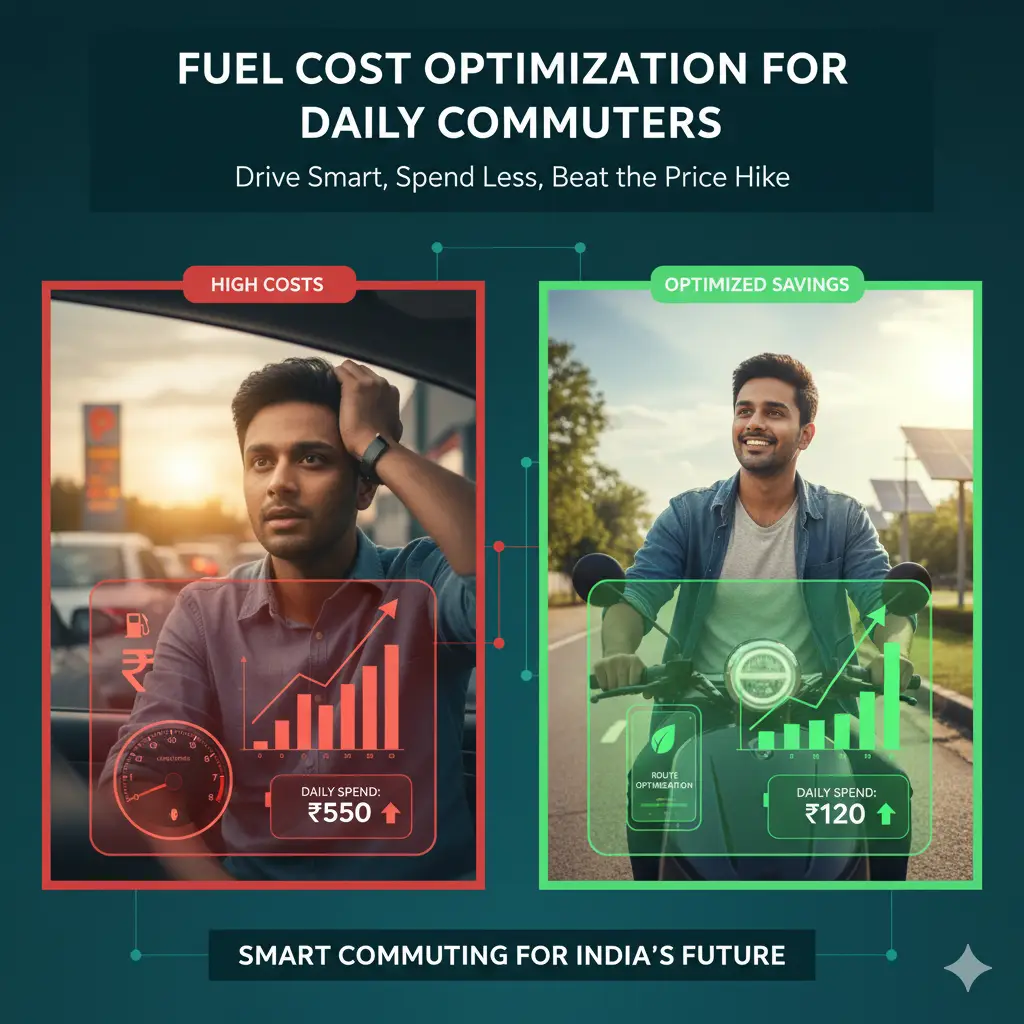
Every morning, like clockwork, my neighbor Raju uncle starts his scooter and heads to the office, 20 km away. “Yaar, petrol ke daam ne toh jeb khali kar di,” he often complains when we meet in the evening. With fuel prices fluctuating like the stock market, his monthly expense was touching ₹3,000 just for the commute. One day, over chai, he shared how he switched to an EV scooter. “Ab charging pe sirf ₹500 lagta hai mahine mein,” he said with a smile. That simple change saved him ₹1,000 every month, enough for a family dinner or extra savings. Raju uncle’s story shows how a little thinking about fuel costs can make a big difference in daily life, especially when mehngai is hitting hard on everything from groceries to gas.
For millions of us commuting to work or errands every day, fuel is that silent drain on the wallet – you don’t notice it until the end of the month when the bank statement arrives. Whether you’re on a bike zipping through traffic or in a car stuck in jams, the cost adds up, eating into your hard-earned paise. Semantic ways to manage commute expenses mean looking beyond just filling the tank; it’s about smarter choices that save money and maybe even help the environment. In India, with petrol prices often crossing ₹100 per liter and traffic making efficiency key, optimizing this daily spend is like finding hidden savings in your routine. This isn’t about big changes; it’s practical stuff like comparing EV vs petrol or small habits that cut costs. We’ll explore how to do it, with real examples to solve your problem of high fuel bills. And to make it easy, use our fuel cost calculator – it helps you see exactly what your commute costs and how to reduce it, linking to tools like car loan EMI calculator if you’re thinking EV switch.
Fuel Cost Reality Check
Average daily commuter in India spends ₹2,000-4,000 monthly on fuel. Switching to EV or simple tips can save ₹500-1,500, turning your ride into a money-saver instead of a spender.
Why Fuel Costs Are a Big Deal for Daily Commuters
The Daily Drain on Your Wallet
Every time you start your vehicle, it’s like opening a tap that lets money flow out. In cities like Mumbai or Bangalore, where distances are long and traffic slow, fuel efficiency drops, making the cost even higher. Semantic commute expense accumulation means small daily spends become big monthly bills, solving which can free up cash for other things like family outings or savings. In day to day life, it’s like that coffee you buy – one is fine, but everyday adds up. With petrol at ₹95-105 per liter, a 50 km daily round trip on a bike can cost ₹1,500 monthly, more for cars. This hits hard when salaries don’t rise as fast as prices, creating a gap in your budget.
A Commuter’s Common Complaint
My colleague in Delhi takes the metro sometimes but prefers his car for comfort. “Traffic mein fuel waste hota hai, mahine ke end mein bill dekh kar sir pakad leta hoon,” he says. He started carpooling, cutting costs by half – a simple fix that solved his fuel worry.
Impact of Price Fluctuations
Fuel prices change often due to global oil or taxes, making budgeting tricky. Semantic volatile fuel pricing means your expense isn’t fixed, solving with alternatives like EV where charging is stable. In India, a 10% price hike can add ₹200-300 monthly for average commuters. Use inflation calculator to see how this affects long-term spends.
Environmental and Health Angle
High fuel use means more pollution, affecting air we breathe. Semantic sustainable commuting choices like EV reduce this, solving health issues from smog in cities. Day to day, it’s better for your lungs and the planet, with EVs also quieter for less stress.
Economic Pressure on Families
For families with multiple commuters, fuel is a major expense. Semantic household transport cost management means optimizing to save for education or vacations. In rural areas, it’s even tougher with longer distances and less public transport.
EV vs Petrol: The Core Comparison for Cost Savings
How EVs Cut Running Costs
Electric vehicles run on charging, costing ₹1-2 per km vs petrol’s ₹5-8. Semantic low operational expense in EVs means big savings over time, solving high fuel bills. For a 30 km daily commute, petrol bike costs ₹1,200 monthly, EV around ₹200 – huge difference. Charging at home is like using your electricity bill, often cheaper at night.
Story of Saving ₹1000 Monthly on Office Commute
Meet Priya, a marketing executive in Bangalore. Her old petrol scooter was guzzling ₹2,500 monthly for office rides. “Mehngai ne mar daala,” she thought. She switched to an EV scooter with a loan via car loan EMI calculator to check affordability. Now, charging costs ₹500-600, saving ₹1,000 every month. “Ab extra paise se coffee pe jaati hoon,” she laughs. Plus, no pollution guilt. This solved her daily fuel tension, with the calculator helping see EMI fit her salary. Use fuel cost calculator to compare your ride.
Upfront Cost vs Long-Term Gains
EVs cost more initially, but savings kick in fast. Semantic initial investment recovery through low running costs means break-even in 2-3 years for heavy commuters. With government subsidies, effective price drops. Link to EV financing guide for loans.
Maintenance and Other Savings
EVs have fewer parts, so service cheaper – no oil changes. Semantic reduced maintenance burden means less garage visits, saving time and money. Batteries last 5-8 years, with warranties.
Environmental Perks as Bonus
Zero emissions mean cleaner air. Semantic eco-friendly transport choice helps reduce city smog, solving health issues from pollution.
EV vs Petrol Comparison Table
| Aspect | Petrol Vehicle | EV |
|---|---|---|
| Running Cost per km | ₹5-8 | ₹1-2 |
| Monthly for 600 km | ₹3,000-4,800 | ₹600-1,200 |
| Maintenance | High (oil, parts) | Low (fewer moving parts) |
| Environmental Impact | High emissions | Zero tailpipe emissions |
| Initial Cost | Lower | Higher, but subsidies help |
This table shows why EV solves cost and eco problems. Interlink with car maintenance cost calculator for more.
Fuel Saving Tips for Petrol Users
Regular Maintenance for Efficiency
Keep tires inflated, oil changed – semantic vehicle health check means better mileage, solving fuel waste from poor condition. A simple tune-up can save 10% on fuel.
Day to Day Maintenance Example
Raju uncle checks tire pressure weekly. “Air kam hone se fuel zyada lagta hai,” he knows from experience. Saved ₹200 monthly just from that.
Smooth Driving Habits
Avoid sudden brakes or acceleration – semantic efficient driving style means less fuel burn in traffic. Use cruise control on highways.
Carpool or Public Transport
Share rides with colleagues – semantic shared commute cost means dividing bills, solving individual high spends. Apps like BlaBlaCar make it easy.
Plan Routes Smartly
Use apps to avoid jams – semantic optimized path selection saves time and fuel. Leave early to miss peak hours.
Fuel-Efficient Vehicles
If buying new, choose high-mileage models. Semantic vehicle choice for efficiency means long-term saves.
Alternative Fuels like CNG
Cheaper than petrol – semantic fuel type switch for cost cut. But check availability in your area.
Using Fuel Cost Calculator for Optimization
How It Works
Input distance, mileage, fuel price – semantic commute cost estimation gives exact monthly spend, solving guesswork. Compare EV vs petrol by changing params.
Step-by-Step Use
- Enter daily km, vehicle mileage.
- Add fuel price – check current via app.
- See monthly cost, try EV numbers for comparison.
- Adjust for tips like better mileage from maintenance.
Interlink with car loan EMI calculator if planning EV buy.
Benefits of Regular Use
Track changes, see saves from tips. Semantic ongoing cost monitoring helps tweak habits.
Overcoming Barriers to EV Adoption
Charging Infrastructure
Growing, but home charging solves for most. Semantic charging solution planning means no range worry.
Daily Charging Example
Priya charges at night like phone – full in morning, ready for day.
Initial Cost Hurdle
Loans and subsidies help. Semantic financing for EVs makes it affordable.
Battery Life Concerns
Warranties 8 years – semantic long-term reliability assurance.
Resale Value Doubts
Improving as EVs popular. Semantic market acceptance growth.
Frequently Asked Questions
Q1: Is EV cheaper than petrol long-term?
Yes, savings on fuel and maintenance cover extra initial cost in 2-3 years.
Q2: How to calculate commute cost?
Use fuel cost calculator – input details for accurate figure.
Q3: Best tip for petrol savers?
Regular maintenance and smooth driving – saves 10-20%.
Q4: EV good for long commutes?
Yes, if range matches and charging available.
Making Your Commute Smarter and Cheaper
Fuel costs don’t have to be a daily headache – with tips like maintenance, carpool, or switching to EV, you can save big like Priya’s ₹1,000 monthly. Semantic efficient transport choices mean more money for what matters, solving the mehngai pressure on commutes. From Raju uncle’s simple switch to your own calculations, it’s about small steps for big wins. Interlink with car maintenance cost calculator for more saves. For authority on EV policies, visit Ministry of Road Transport and Highways. Happy commuting – may your rides be light on the pocket!
Calculate Your Fuel Costs: Use our fuel cost calculator. Explore utility planning and all guides.
For EV info, visit Ministry of Road Transport and Highways. Link with car loan EMI calculator.