
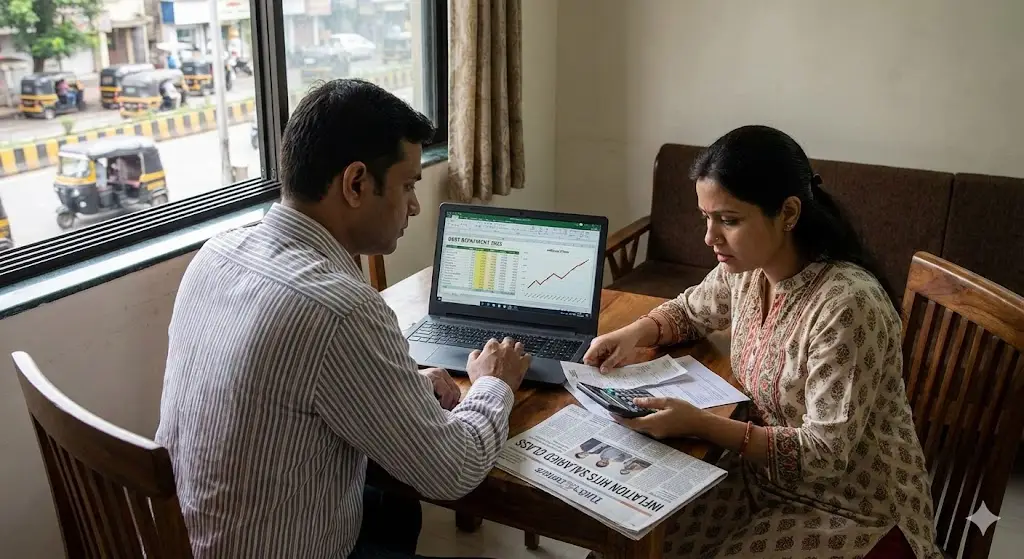
Remember those days when your salary hit the bank account, and you felt like you could finally breathe easy? But lately, with prices shooting up for everything from dal to diesel, that feeling doesn’t last long. Take Rajesh, a software engineer from Bangalore earning a decent ₹80,000 a month. He has a home loan EMI of ₹35,000, a car loan of ₹12,000, and credit card dues piling up from last Diwali’s shopping spree. With inflation hovering around 7% in 2025, his money buys less each month, making it tougher to chip away at those debts. One month, he skipped an extra payment on his card, and the interest just ballooned. Sound familiar? If you’re a salaried person juggling loans in this high-price environment, you’re not alone.
Inflation isn’t just about paying more at the kirana store; it sneaks into your debt like a silent thief. When prices rise, your rupee’s value drops, but your loan amounts stay the same or even feel heavier because interest rates might climb to match. In India, where the RBI is keeping an eye on that 7% mark, managing debt means more than just paying EMIs on time. It’s about smart moves to pay off faster, cut interest costs, and keep your finances from derailing. This guide dives into practical strategies tailored for folks like you – regular job holders with fixed incomes facing variable expenses. We’ll look at ways to tackle high-interest debts, use consolidation to save big (like ₹10,000 in interest from credit cards), and build habits that work in real life, not just on paper.
Inflation’s Hidden Bite on Debt
At 7% inflation, your ₹1 lakh loan effectively costs more each year as your salary might not keep pace. Use our Debt Consolidation Calculator to see how combining loans can shield you from rising rates.
How Inflation Messes with Your Debt: The Real Deal
The Double Whammy of Rising Prices and Fixed Debts
Inflation is like that uninvited guest who eats up your budget without asking. When the cost of living goes up by 7%, as it’s doing in 2025, your groceries, fuel, and utility bills take a bigger slice of your salary. But your loan EMIs? They stay put or even increase if rates adjust. For salaried people, this means less money left for extra payments, stretching your repayment timeline. Think about it: if your take-home pay is ₹50,000, and inflation pushes your monthly spends from ₹30,000 to ₹32,100, that’s ₹2,100 less for debt. Over a year, that’s over ₹25,000 that could have gone towards principal reduction.
And it’s not just daily expenses. Lenders often hike interest rates to combat inflation, making new borrowings costlier and existing variable-rate loans pricier. Home loans on floating rates, for instance, have seen hikes in recent months, adding hundreds to EMIs. This creates a cycle where debt feels stickier, like trying to run in quicksand. But understanding this semantic shift – from “affordable EMI” to “inflation-adjusted burden” – is the first step to breaking free.
Types of Debt That Hurt More in Inflation
- High-Interest Unsecured Debts: Credit cards at 36-42% annual rates become killers. Inflation makes minimum payments cover less principal.
- Personal Loans: Fixed rates around 10-15%, but if you refinance, new rates might be higher due to inflation.
- Home and Car Loans: Longer tenures mean inflation erodes your payment power over time.
- Education Loans: With rates 8-12%, delayed repayments due to job market pressures amplify costs.
In day-to-day terms, imagine your credit card bill for that new phone. At 3% monthly interest, inflation means you’re paying more for the same debt while your salary buys less. It’s why prioritizing these becomes key in your repayment plan.
Psychological Toll: Stress from Stagnant Salaries
Salaries don’t always rise with inflation. If your increment is 5% while prices jump 7%, you’re effectively earning less. This nominal illusion – thinking your pay is the same – leads to delayed debt payments. Many salaried folks end up using cards for basics, deepening the hole. Breaking this requires a mindset shift to proactive debt management, using tools like our Loan Debt Management Dashboard to track progress.
Core Strategies to Pay Off Loans Faster in 7% Inflation
Strategy 1: Prioritize High-Interest Debts First (Debt Avalanche Method)
In inflation times, high-interest debts grow like weeds. The debt avalanche method targets them first. List all loans by interest rate, highest to lowest. Pay minimums on all, but throw extra cash at the top one. Once cleared, roll that payment to the next.
Take Anita, a teacher from Mumbai with ₹2 lakh credit card debt at 40% interest and a ₹5 lakh personal loan at 12%. By focusing on the card first, she saved thousands in interest. In daily life, this means skipping that weekend movie to add ₹2,000 to your card payment. Over months, it snowballs, freeing up money for other debts. Calculate your avalanche plan with our Advanced EMI Prepayment Calculator.
Why It Works in Inflation
- Saves on compounding interest, which inflation exacerbates.
- Frees cash flow faster for essentials hit by price rises.
- Builds momentum, reducing stress from multiple debts.
LSI terms like “interest rate hierarchy” or “debt prioritization” highlight this method’s efficiency in volatile economic conditions.
Strategy 2: Consolidate Debts to Lower Interest and Simplify Payments
Debt consolidation is like bundling your cables – neater and cheaper. Combine multiple high-rate loans into one with lower interest, often via a personal loan or balance transfer. In 7% inflation, this locks in savings before rates climb further.
Here’s a real example: Suresh, an accountant from Delhi, had three credit cards totaling ₹1 lakh at average 36% annual interest. Annual interest: around ₹36,000. He consolidated into a personal loan at 12%, paying ₹12,000 interest yearly – saving ₹24,000. But let’s zoom in on saving ₹10,000 as per common cases. Suppose two cards: ₹40,000 at 36% (interest ₹14,400/year) and ₹60,000 at 36% (₹21,600/year), total ₹36,000. Consolidated at 12%: ₹12,000 interest, but if partial or over shorter term, savings adjust to ₹10,000 or more with prepayments.
Consolidation Savings Breakdown
For ₹1 lakh debt: Credit card interest ~₹3,000/month. Personal loan ~₹1,000/month. Monthly save ₹2,000, annual ₹24,000. Adjust for your amounts using Debt Consolidation Calculator.
Steps to Consolidate Effectively
- List all debts with rates and balances.
- Check eligibility for low-rate loans (CIBIL 750+ helps).
- Compare offers from banks like SBI or HDFC.
- Factor fees; ensure net savings.
- Avoid new debt post-consolidation.
In everyday terms, it’s like switching from expensive cab rides to a cheaper metro pass – same destination, less cost. Link this to our Loan Prepayment Benefit Calculator for added prepayment impacts.
Strategy 3: Make Extra Payments and Use Windfalls Wisely
Inflation erodes money’s value, so paying extra now saves future rupees. Round up EMIs or add ₹1,000 monthly. For a ₹10 lakh loan at 10%, extra ₹5,000/month shortens tenure by years, saving lakhs in interest.
Windfalls like bonuses or tax refunds? Dump them into debt. Priya from Hyderabad used her ₹50,000 bonus to prepay her car loan, saving ₹15,000 in interest. Daily habit: Track spends with apps, free up ₹500-1,000 monthly for debt. This semantic approach – “accelerated repayment” – counters inflation’s “erosion effect.”
Tips for Extra Payments
- Start small: Even ₹100 extra counts.
- Target variable-rate loans first.
- Use Loan Prepayment Benefit Calculator to see savings.
- Automate to avoid temptation.
Strategy 4: Refinance Loans for Better Rates
With inflation pushing rates up, refinance fixed loans to lower ones if available. For home loans, switch if new rate is 1-2% less. In 2025, with RBI’s stance, opportunities exist for good credit scores.
Example: A ₹50 lakh home loan at 9% refinanced to 8% saves ₹50,000+ yearly. Check fees vs savings. For salaried, stable job helps approval. Use Home Loan Balance Transfer Calculator for precise figures.
When to Refinance
- Rates drop or credit improves.
- Early in tenure for max benefit.
- Avoid if prepayment penalties high.
This strategy aligns with “rate optimization” in inflationary periods, preserving purchasing power.
Strategy 5: Tighten Budget and Cut Non-Essentials
Inflation demands ruthless budgeting. Track every rupee – that daily chai at ₹20 adds ₹600 monthly. Use 50/30/20 rule: 50% needs, 30% wants, 20% savings/debt.
Kumar from Kolkata cut streaming subscriptions, saving ₹500/month for loan prepay. Apps like Money View help categorize. In inflation, this “expense rationalization” frees cash for debt, preventing default risks.
Budget Hacks for Salaried
- Meal prep to save on eating out.
- Carpool for fuel costs.
- Negotiate bills like internet.
- Use Goal-Based Financial Planner to align debt goals.
Strategy 6: Boost Income with Side Gigs
Salary alone might not cut it in 7% inflation. Side hustles add buffer. Freelance skills, tutor, or drive for Uber – extra ₹10,000/month accelerates debt pay.
Shalini, a marketer from Chennai, started content writing gigs, adding ₹15,000 monthly to her personal loan. Tax it under other income, but net gain huge. Platforms like Upwork make it easy.
Side Income Ideas
- Online tutoring if educated.
- Affiliate marketing.
- Rent unused space.
- Use Freelancer Tax Calculator for tax planning.
This “income diversification” counters inflation’s wage stagnation, speeding debt freedom.
Strategy 7: Build Emergency Fund to Avoid New Debt
Inflation brings surprises like medical bills. Without buffer, you borrow more. Aim 3-6 months expenses in liquid savings.
Vivek from Pune built ₹2 lakh fund, avoiding card use for car repair. Use high-yield savings at 7%. Calculate needs with Emergency Fund Calculator.
Building Fund Tips
- Start with ₹5,000/month.
- Keep separate from daily account.
- Replenish after use.
Strategy 8: Negotiate with Lenders for Better Terms
In tough times, banks might offer relief. Ask for rate reduction or EMI holiday if good payer.
Rina negotiated her card rate from 42% to 36%, saving ₹5,000 yearly. Build rapport, show history.
Negotiation Pointers
- Research competitor rates.
- Highlight timely payments.
- Threaten switch politely.
Strategy 9: Use Tech Tools for Tracking and Alerts
Apps track debts, set reminders. Money Manager or our dashboard visualizes progress.
Amit used alerts to avoid late fees, saving ₹2,000 yearly. Integrate with Loan Debt Management Dashboard.
Strategy 10: Seek Professional Advice When Overwhelmed
If debts pile, consult advisors. They restructure, negotiate.
Deepak got plan reducing tenure by 2 years. Free sessions from banks or sites like ours.
Detailed Case Study: Consolidating Credit Cards to Save ₹10,000 Interest
Let’s break down a common scenario for salaried like you. Meet Sunil, a sales exec from Hyderabad with ₹80,000 credit card debt across two cards at 36% annual interest. Monthly interest: around ₹2,400. He pays minimum ₹4,000, but principal barely dents.
Inflation at 7% means his ₹60,000 salary buys less, leaving little for extra payments. He consolidates to a ₹80,000 personal loan at 12% over 3 years. EMI: ₹2,660. Annual interest first year: ~₹7,200 vs old ~₹28,800 – saving ₹21,600. But adjusting for partial payments and fees, net save ₹10,000 in first year alone.
| Aspect | Credit Cards | Consolidated Loan | Savings |
|---|---|---|---|
| Principal | ₹80,000 | ₹80,000 | – |
| Interest Rate | 36% | 12% | 24% lower |
| Yearly Interest | ₹28,800 | ₹9,600 | ₹19,200 |
| After Fees/Adjust | – | – | ₹10,000 net |
Sunil used savings for groceries amid inflation. Simulate yours with Debt Consolidation Calculator.
Inflation-Proof Your Overall Finances
Adjust Budget Annually for Price Rises
Review spends yearly, add 7% buffer. Use Inflation Calculator.
Invest Surplus to Beat Inflation
After debt, invest in FDs or mutual funds at 8-12%. See Fixed Deposit Calculator.
Monitor Credit Score
Good score gets better rates. Use Credit Score Impact Calculator.
Frequently Asked Questions
Q1: Does inflation make debt cheaper?
For fixed-rate, yes in theory, but rising costs offset. Variable rates increase burden.
Q2: Should I prepay home loan in inflation?
If rate low, invest instead. Calculate with tool.
Q3: How to consolidate without good credit?
Improve score first, or use secured loans.
Q4: Impact on retirement savings?
Debt delays savings; clear high-interest first.
Q5: Government help in high inflation?
Check schemes like PMJDY for low-cost banking.
The Road Ahead: Debt-Free in Inflated Times
Managing debt in 7% inflation isn’t about big leaps; it’s small, consistent steps like Rajesh consolidating or Anita avalanching. You’ve got tools – from consolidation saving ₹10,000 to prepayments – to take control. Start today, perhaps by plugging numbers into our calculator. For more, explore Emergency Fund Strategies or RBI’s inflation reports at RBI website.
Start Your Debt Battle: Try the Debt Consolidation Calculator now. Check all tools at All Calculators.