
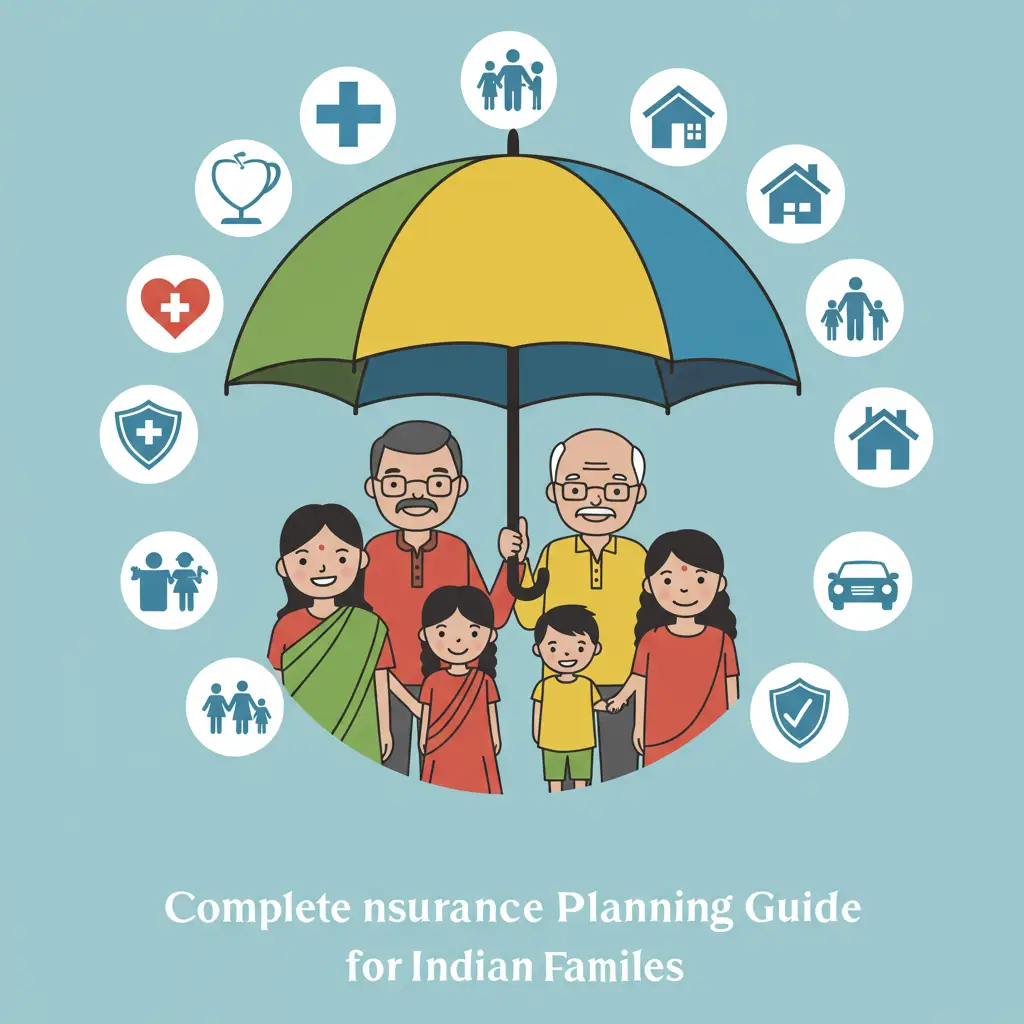
Protect Your Loved Ones the Right Way
Insurance Reality Check: 83% of Indian families are severely under-insured. The average Indian has life cover of just 3-4 times annual income when experts recommend 10-15 times. Worse, 40% of families buy expensive investment-cum-insurance policies that provide poor coverage and low returns. One medical emergency or untimely death can destroy decades of financial planning.
Insurance is the foundation of financial planning, yet it’s the most misunderstood and poorly implemented aspect of Indian family finances. We buy insurance when we shouldn’t, avoid it when we desperately need it, and choose the wrong products that leave us both over-paying and under-protected.
The insurance industry in India thrives on this confusion, selling complex products that benefit agents more than customers. ULIPs, endowment plans, and money-back policies sound attractive but often deliver neither adequate insurance nor good investment returns – leaving families vulnerable when they need protection the most.
This comprehensive guide will transform your approach to insurance from confusion to clarity. You’ll learn to calculate exact coverage needs, choose the right products, avoid expensive mistakes, and create an insurance plan that truly protects your family’s financial future.
Understanding Insurance: Protection vs Investment
The biggest mistake Indian families make is confusing insurance with investment. Insurance is meant to protect against financial loss, not to build wealth. Once you understand this fundamental principle, insurance planning becomes much simpler.
The Core Purpose of Insurance
- Risk Transfer: Transfer the financial risk of unforeseen events to insurance company
- Income Replacement: Provide money to family if primary earner dies or becomes disabled
- Expense Coverage: Cover large unexpected expenses like medical bills
- Debt Protection: Ensure loans don’t burden family after breadwinner’s death
- Goal Preservation: Keep financial goals on track despite setbacks
Insurance vs Investment: The Clear Distinction
What Insurance Should Do:
- Provide maximum coverage at minimum cost
- Protect family’s standard of living
- Cover large, unpredictable expenses
- Give peace of mind about financial security
What Insurance Should NOT Do:
- Generate wealth or high returns
- Replace systematic investment plans
- Serve as tax-saving investment
- Provide retirement planning solution
Types of Insurance Every Family Needs
Essential Insurance Portfolio for Indian Families
Life Insurance:
- Term Insurance: High coverage, low premium, pure protection
- Coverage needed: 10-15 times annual income
- Who needs it: Primary and secondary earners
Health Insurance:
- Family floater: Covers entire family under one policy
- Coverage needed: ₹10-25 lakh in metro cities
- Who needs it: Every family member
Disability Insurance:
- Personal accident: Covers accidental death/disability
- Coverage needed: 5-10 times annual income
- Who needs it: All earning members
Term Insurance: Your Family’s Financial Backbone
Term insurance is the purest and most cost-effective form of life insurance. It provides maximum coverage at minimum cost, making it ideal for young families with limited budgets but high protection needs.
Why Term Insurance is Superior
Term vs Traditional Insurance: Cost Comparison
Profile: 30-year-old male, non-smoker, ₹1 crore coverage
Term Insurance:
- Annual premium: ₹12,000-15,000
- Coverage: ₹1 crore
- Total premiums (20 years): ₹2.5 lakh
- Cost per lakh coverage: ₹250
Endowment Plan:
- Annual premium: ₹65,000
- Coverage: ₹1 crore
- Total premiums (20 years): ₹13 lakh
- Cost per lakh coverage: ₹1,300
Key Insight: Term insurance provides same coverage at 1/5th the cost!
Calculating Your Life Insurance Coverage
The right coverage amount ensures your family can maintain their lifestyle and achieve financial goals even without your income.
Method 1: Human Life Value Approach
Coverage Calculation Example
Profile: Rajesh, 35, annual income ₹12 lakh, 25 years to retirement
Step-by-Step Calculation:
- Annual income: ₹12 lakh
- Personal expenses (25%): ₹3 lakh
- Family dependent income: ₹9 lakh
- Future value (7% growth, 25 years): ₹9L × 63.25 = ₹5.69 crore
- Present value (8% discount): ₹83.5 lakh
Additional Needs:
- Outstanding home loan: ₹45 lakh
- Children’s education: ₹30 lakh
- Emergency fund: ₹10 lakh
- Final expenses: ₹5 lakh
Total Coverage Needed: ₹1.73 crore
Existing assets to deduct: ₹25 lakh
Required term insurance: ₹1.5 crore
Method 2: Simple Thumb Rules
- Basic rule: 10-15 times annual income
- With dependents: 15-20 times annual income
- High expenses/loans: 20-25 times annual income
- Minimum coverage: Never less than 10 times income
Choosing the Right Term Insurance Policy
| Factor | What to Look For | Why It Matters | Red Flags |
|---|---|---|---|
| Claim Settlement Ratio | 95%+ settlement ratio | Indicates insurer’s reliability | Below 90% settlement ratio |
| Solvency Ratio | Above 1.5 | Company’s ability to pay claims | Below 1.2 solvency ratio |
| Premium Rates | Competitive but not cheapest | Balance of cost and reliability | Suspiciously low premiums |
| Policy Terms | Clear, simple language | Avoid claim disputes | Complex exclusions |
| Online Process | Easy online purchase/service | Convenience and transparency | Only offline procedures |
Term Insurance Riders: Adding Extra Protection
- Accidental Death Benefit: Additional payout for accidental death
- Disability Rider: Premium waiver if totally disabled
- Critical Illness Rider: Advance payout for specified diseases
- Income Benefit Rider: Monthly income instead of lump sum
Term Insurance Buying Tips
- Buy young: Premiums are significantly lower at younger ages
- Buy healthy: Medical conditions increase premiums or cause rejection
- Honest disclosure: Never hide medical history or lifestyle habits
- Compare online: Online plans are typically 10-15% cheaper
- Review regularly: Increase coverage with major life events
Health Insurance: Your Shield Against Medical Inflation
Healthcare costs in India are rising at 15% annually, making health insurance not just important but absolutely critical for every family’s financial survival.
The Healthcare Cost Reality
Medical Expense Reality Check
Common Treatment Costs (Metro Cities, 2025):
- Heart surgery: ₹3-8 lakh
- Cancer treatment: ₹5-15 lakh per year
- Kidney transplant: ₹10-20 lakh
- Normal delivery: ₹50,000-1 lakh
- C-section delivery: ₹1-2 lakh
- ICU per day: ₹8,000-25,000
Without insurance: One major illness can wipe out years of savings
Types of Health Insurance
Individual Health Insurance
- Coverage: Single person only
- Premium: Age-based, increases annually
- Best for: Singles or when family members have different health needs
Family Floater Policy
- Coverage: Entire family under single sum insured
- Premium: Based on oldest member’s age
- Best for: Young families with healthy members
- Limitation: One major claim can exhaust entire limit
Top-Up and Super Top-Up Plans
- Top-up: Activates after deductible per claim
- Super top-up: Activates after annual deductible
- Best use: Enhance coverage at low cost
Determining Adequate Health Coverage
Health Insurance Coverage Guide
By City Type:
- Metro cities: ₹15-25 lakh per family
- Tier-1 cities: ₹10-20 lakh per family
- Tier-2/3 cities: ₹5-15 lakh per family
By Family Size:
- Single person: ₹5-10 lakh
- Couple: ₹8-15 lakh
- Family with kids: ₹15-25 lakh
- Joint family: ₹20-40 lakh
Age-based Strategy:
- 20-30 years: Basic coverage sufficient
- 30-45 years: Comprehensive family coverage
- 45+ years: Higher coverage with critical illness
Health Insurance Features to Look For
- Cashless network: Large hospital network for cashless treatment
- Room rent limit: No capping or high percentage of sum insured
- Pre and post hospitalization: 30-60 days coverage
- Day care procedures: Treatments not requiring 24-hour admission
- Maternity coverage: If planning children
- No claim bonus: Coverage increase for claim-free years
- Restoration benefit: Sum insured restoration after claim
Insurance Products to Avoid: Common Traps
The insurance industry sells many products that provide neither adequate protection nor good investment returns. Understanding what to avoid is as important as knowing what to buy.
ULIPs: The Investment-Insurance Hybrid Trap
Why ULIPs Don’t Work for Most People
ULIP Problems:
- High charges: Premium allocation, policy admin, fund management charges
- Low coverage: Life cover is only 10 times annual premium
- Lock-in period: 5 years with exit penalties
- Poor returns: High charges reduce investment returns significantly
- Complexity: Difficult to understand actual returns
Better Alternative:
- Term insurance + Mutual Fund SIP
- Higher coverage + Better investment returns
- Lower total cost + More flexibility
Endowment and Money-Back Policies
- Problem 1: Very low returns (4-6% annually)
- Problem 2: Insufficient life coverage
- Problem 3: Long lock-in periods with poor liquidity
- Problem 4: Maturity proceeds are taxable
Whole Life and Universal Life Insurance
- Issue: Extremely high premiums for same coverage
- Reality: Most people can’t afford adequate coverage
- Better approach: Term insurance + separate investment planning
Insurance for Different Life Stages
Your insurance needs change as you progress through different life stages. Here’s how to adapt your insurance planning accordingly.
Young Single Professional (22-28 years)
Insurance Needs: Starting Career
Primary Needs:
- Health insurance: ₹5-8 lakh individual policy
- Term insurance: ₹25-50 lakh (if supporting parents)
- Personal accident: ₹10-20 lakh
Strategy:
- Start with basic coverage while premiums are lowest
- Focus on health insurance as primary need
- Buy term insurance only if you have dependents
- Avoid investment-linked insurance products
Annual Premium Budget:
- Health insurance: ₹8,000-12,000
- Term insurance: ₹3,000-5,000 (if needed)
- Total: ₹8,000-17,000
Young Married Couple (25-35 years)
Insurance Needs: Building Family
Essential Coverage:
- Health insurance: ₹10-15 lakh family floater
- Term insurance (both spouses): 10-15 times combined income
- Personal accident: Both working spouses
- Maternity coverage: If planning children
Coverage Calculation Example:
- Husband’s income: ₹8 lakh → Term insurance: ₹1 crore
- Wife’s income: ₹5 lakh → Term insurance: ₹50 lakh
- Family health cover: ₹15 lakh
- Personal accident: ₹25 lakh each
Annual Premium Budget:
- Combined term insurance: ₹18,000-25,000
- Family health insurance: ₹15,000-25,000
- Personal accident: ₹3,000-5,000
- Total: ₹36,000-55,000
Family with Young Children (30-45 years)
Insurance Needs: Peak Responsibility Phase
Maximum Protection Required:
- Term insurance: 15-20 times income (education costs)
- Health insurance: ₹20-30 lakh family coverage
- Child-specific coverage: Education insurance or increased term cover
- Critical illness: Additional protection for breadwinner
Comprehensive Family Protection:
- Primary earner term insurance: ₹2 crore
- Spouse term insurance: ₹75 lakh
- Family health insurance: ₹25 lakh
- Top-up health cover: ₹25 lakh additional
- Children’s specific health cover
Pre-Retirement (45-55 years)
Insurance Needs: Transitioning Focus
Changing Priorities:
- Reduced term insurance: Children becoming independent
- Enhanced health coverage: Age-related health risks increase
- Critical illness focus: Higher probability of serious illnesses
- Long-term care planning: Disability and care costs
Strategic Adjustments:
- Maintain term insurance until all debts are cleared
- Increase health insurance to ₹30-50 lakh
- Add critical illness coverage
- Consider long-term care insurance
Post-Retirement (55+ years)
- Minimal life insurance: Only for final expenses and spouse support
- Maximum health coverage: ₹25-50 lakh with comprehensive benefits
- Senior citizen specific plans: No age bar renewal policies
- Domiciliary treatment: Home treatment coverage
Making Successful Insurance Claims
Having insurance is only half the battle – getting claims settled smoothly is equally important. Here’s how to ensure your claims are processed without hassles.
Claim Documentation Checklist
Life Insurance Claims:
- Death certificate: Original from municipal authority
- Policy documents: Original policy and premium receipts
- Claim form: Filled and signed by nominee
- Medical records: If death due to illness
- Post-mortem report: If death due to accident
- Police FIR: If unnatural death
- ID and address proof: Of nominee
Health Insurance Claims:
- Cashless pre-authorization: Hospital approval before treatment
- Original bills: All medical bills and receipts
- Discharge summary: Detailed medical summary
- Investigation reports: All diagnostic tests
- Doctor’s prescription: Medicine prescriptions
- Identity proof: Policy holder and patient ID
Claim Settlement Tips
Ensuring Smooth Claim Settlement
Before You Need to Claim:
- Read policy terms: Understand coverage and exclusions
- Keep documents safe: Digital and physical copies
- Update nominees: Keep nominee details current
- Maintain contact: Update address and phone regularly
During Claim Process:
- Inform immediately: Notify insurer within 24-48 hours
- Follow procedures: Complete all required formalities
- Maintain records: Keep copies of all submitted documents
- Follow up regularly: Track claim status proactively
If Claim is Rejected:
- Understand reasons: Get written explanation for rejection
- Review policy: Check if rejection is justified
- Provide additional documents: If any information is missing
- Escalate complaints: Use insurance ombudsman if needed
Common Insurance Mistakes That Cost Families Dearly
Learning from common mistakes can save your family from financial disasters when they need insurance protection the most.
Coverage-Related Mistakes
Mistake 1: Inadequate Coverage
Common Error: Buying ₹10-20 lakh term insurance when you need ₹1+ crore
Consequence: Family struggles financially despite having “insurance”
Solution: Calculate coverage based on income replacement needs, not premium affordability
Mistake 2: Mixing Insurance with Investment
Common Error: Buying ULIPs or endowment plans for “guaranteed returns”
Consequence: Poor coverage + Poor investment returns
Solution: Buy term insurance + Invest separately in mutual funds
Purchase-Related Mistakes
- Buying too late: Waiting until 35-40 when premiums are much higher
- Health insurance gaps: Waiting periods between job changes
- Not reading fine print: Unaware of exclusions and waiting periods
- Buying from wrong sources: Choosing agents based on relationships, not expertise
Maintenance Mistakes
- Premium defaults: Letting policies lapse due to non-payment
- Not updating nominees: Outdated beneficiary information
- Ignoring policy reviews: Not increasing coverage with life changes
- Document mismanagement: Losing important policy documents
Insurance Tax Benefits: Optimizing Section 80C and 80D
Insurance premiums provide valuable tax deductions, but many families don’t optimize these benefits properly.
Section 80C: Life Insurance Premiums
- Eligible premiums: Term insurance, traditional life insurance
- Deduction limit: Up to ₹1.5 lakh (combined with other 80C investments)
- Premium limit: Maximum 10% of sum assured (for tax benefit)
- Tax saving: Up to ₹46,800 annually (30% tax bracket)
Section 80D: Health Insurance Tax Benefits
Maximizing Section 80D Benefits
Family Situation: 35-year-old couple with parents above 60
Optimal Tax Strategy:
- Self and family health insurance: ₹25,000 premium
- Parents’ health insurance: ₹50,000 premium (senior citizen)
- Preventive health checkup: ₹5,000
- Total Section 80D deduction: ₹80,000
- Tax saved (30% bracket): ₹24,000 annually
Key Benefit: Tax savings while getting essential health protection!
Tax-Efficient Insurance Planning
- Timing premiums: Pay annual premiums in March for immediate tax benefit
- Family strategy: Buy separate policies for parents to maximize 80D limits
- Preventive checkups: Include family health checkups for additional deduction
- Document everything: Keep all premium payment receipts
Digital Insurance: The Future of Insurance Buying
The insurance industry is rapidly digitalizing, offering better prices, faster processing, and more transparency through online platforms.
Advantages of Online Insurance
- Lower premiums: 10-15% cheaper than offline policies
- Faster processing: Instant policy issuance
- Better comparison: Easy to compare multiple policies
- Transparent terms: Clear policy wordings and conditions
- Quick claims: Faster claim processing and settlement
- 24/7 service: Online access to policy services
How to Buy Insurance Online Safely
- Use official websites: Buy directly from insurer’s website
- Check credentials: Verify company’s IRDAI registration
- Read carefully: Understand all terms and conditions
- Compare properly: Don’t just look at price, consider coverage
- Keep records: Download and save all policy documents
Digital Tools for Insurance Management
- Insurer mobile apps: Policy management and claim tracking
- Aggregator platforms: Compare policies across insurers
- Digital wallets: Easy premium payment and renewal
- Health apps: Wellness tracking for health insurance benefits
Creating Your Family Insurance Plan
Let’s put everything together and create a comprehensive insurance plan tailored to your family’s specific needs and life stage.
Case Study: Complete Family Insurance Planning
Family Profile: Suresh (35) & Priya (32), 2 children (8 & 5), Combined income: ₹18 lakh
Insurance Needs Analysis:
- Life insurance need: ₹2.5 crore (considering children’s education, loans)
- Health insurance need: ₹25 lakh (metro city family)
- Accident coverage need: ₹50 lakh each for working spouses
Optimal Insurance Portfolio:
Life Insurance:
- Suresh term insurance: ₹2 crore (₹24,000 annual premium)
- Priya term insurance: ₹50 lakh (₹8,000 annual premium)
Health Insurance:
- Family floater: ₹15 lakh (₹18,000 annual premium)
- Super top-up: ₹25 lakh with ₹3 lakh deductible (₹8,000 premium)
- Total health coverage: ₹40 lakh
Accident Insurance:
- Personal accident for both spouses: ₹50 lakh each (₹4,000 combined)
Total Annual Premium: ₹62,000
Coverage Provided: ₹4.9 crore total protection
Cost as % of income: 3.4% (well within recommended 5%)
Tax Benefits:
- Section 80C benefit: ₹32,000 × 30% = ₹9,600
- Section 80D benefit: ₹26,000 × 30% = ₹7,800
- Total annual tax savings: ₹17,400
- Net insurance cost: ₹44,600 (after tax benefits)
Your Insurance Planning Worksheet
Step-by-Step Insurance Planning
Step 1: Calculate Life Insurance Need
- Annual income: ₹______
- Years to retirement: ______
- Income replacement needed: ₹______ (use 70% of income)
- Additional needs (loans, education, etc.): ₹______
- Existing assets to deduct: ₹______
- Required life cover: ₹______
Step 2: Determine Health Insurance Coverage
- City type: Metro/Tier-1/Tier-2
- Family size: ______
- Any existing health conditions: ______
- Based on city and family: ₹______ recommended
- Required health cover: ₹______
Step 3: Research and Compare
- Get quotes from 3-4 insurers
- Check claim settlement ratios
- Compare policy terms and conditions
- Consider online vs offline purchase
Step 4: Purchase and Organize
- Buy policies with honest disclosure
- Organize all documents digitally
- Set renewal reminders
- Update nominees and beneficiaries
Insurance Planning Action Plan
Transform your family’s financial security with this systematic approach to insurance planning:
Phase 1: Assessment and Planning (Week 1-2)
- Calculate life insurance needs using our term insurance calculator
- Assess health insurance requirements with our coverage gap analysis
- Review existing policies and identify gaps
- Research top-rated insurers and their claim settlement records
- Create family insurance budget (3-5% of annual income)
Phase 2: Research and Selection (Week 3-4)
- Get quotes from multiple insurers for each type of coverage
- Compare policy features, not just premiums
- Read policy terms and conditions carefully
- Check insurer’s digital capabilities and customer service
- Select optimal policies for your family’s needs
Phase 3: Purchase and Implementation (Week 5-6)
- Complete health check-ups if required for underwriting
- Purchase policies with complete honest disclosure
- Set up digital document management system
- Create premium payment schedule and auto-pay setup
- Update nominees and beneficiaries across all policies
Phase 4: Monitoring and Optimization (Ongoing)
- Annual policy review and coverage adequacy check
- Update coverage with major life events (marriage, children, promotions)
- Track insurer performance and consider switching if needed
- Maintain updated health records and policy documents
- Educate family members about policy benefits and claim process
Conclusion: Insurance as Your Family’s Financial Foundation
Insurance is not an expense – it’s an investment in your family’s financial security and peace of mind. The cost of adequate insurance is always less than the financial devastation that one uninsured event can cause.
Remember the case study of Suresh and Priya’s family? For just ₹62,000 annually (3.4% of their income), they secured ₹4.9 crore worth of protection. Even after accounting for tax benefits, their net cost was only ₹44,600 – less than what many families spend on entertainment annually.
The key to successful insurance planning is starting early, buying adequate coverage, choosing the right products, and avoiding the investment-cum-insurance trap. Term insurance for protection, health insurance for medical emergencies, and separate investments for wealth creation – this simple formula has protected millions of families worldwide.
Don’t wait for the perfect moment or perfect knowledge to start. Insurance needs increase with age and health changes, making delays costly. Start with basic coverage today, learn as you go, and enhance your protection as your understanding and income grow.
Your family’s financial security depends on the insurance decisions you make today. Use the strategies and tools in this guide to build a comprehensive protection plan that shields your loved ones from life’s uncertainties while supporting your long-term financial goals.
For more insurance planning resources and calculators, explore our comprehensive insurance planning suite. Your family’s protection is too important to leave to chance – plan it systematically and secure it properly.
Remember: Insurance is Love Made Tangible
- Buy early – premiums are lowest when you’re young and healthy
- Buy adequate – under-insurance is often worse than no insurance
- Keep it simple – term insurance + health insurance covers most needs
- Review regularly – life changes, insurance should too
- Claim confidently – know your rights and policy benefits
Protect your family today – because love means never having to worry about their financial security!